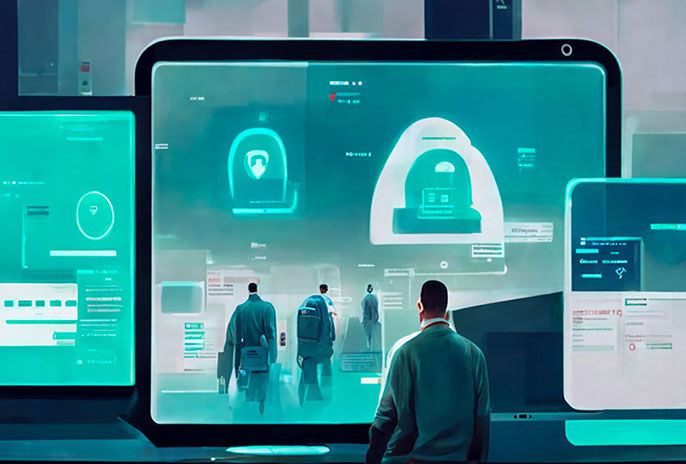






In this increasingly digital society, we have experienced major changes in our lifestyles. But while digital technologies provide convenience, cyber security-related threats have been magnified to a global level. Information assets, which used to be isolated inside a company’s internal network, are now stored in a wide range of complex network environments, resulting in an increase in security threats such as unauthorized access, data leakage, spam/malware, and zero-day attacks.
The zero-trust model has been attracting a lot more attention lately as a new security approach for addressing such common IT security threats. Based on the principle of not trusting anyone and verifying everything, according to the zero-trust model any access should be distrusted and no access to data should be permitted until the access is verified properly.
This article describes how to protect your information assets from security threats, including unauthorized access, data leaks, spam/malware, zero-day attacks, and unknown threats, through the introduction of the zero-trust model. Moreover, we discuss, in a clear and concise way, points that should be implemented at overseas offices, as well as common IT security threats and corresponding zero-trust measures.